
This Saturday I spent the entire day with Sloan. The reason? Well, let me tell you…
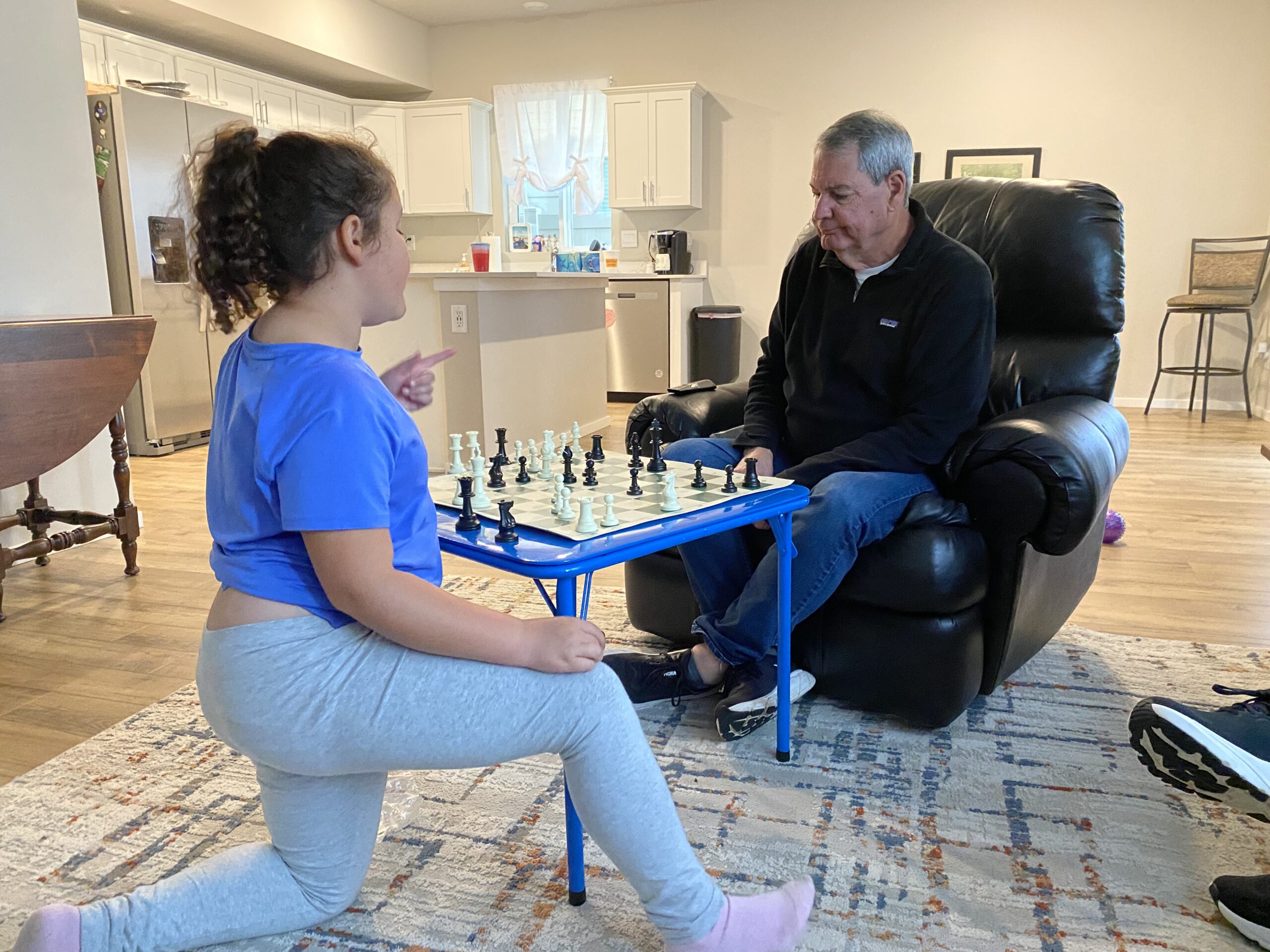
Back in October I wrote about Sloan joining the St. Mary chess club. I mentioned that her desire to learn the game opened an entirely new way for us to connect. Suddenly, I was playing nightly chess matches with my daughter.
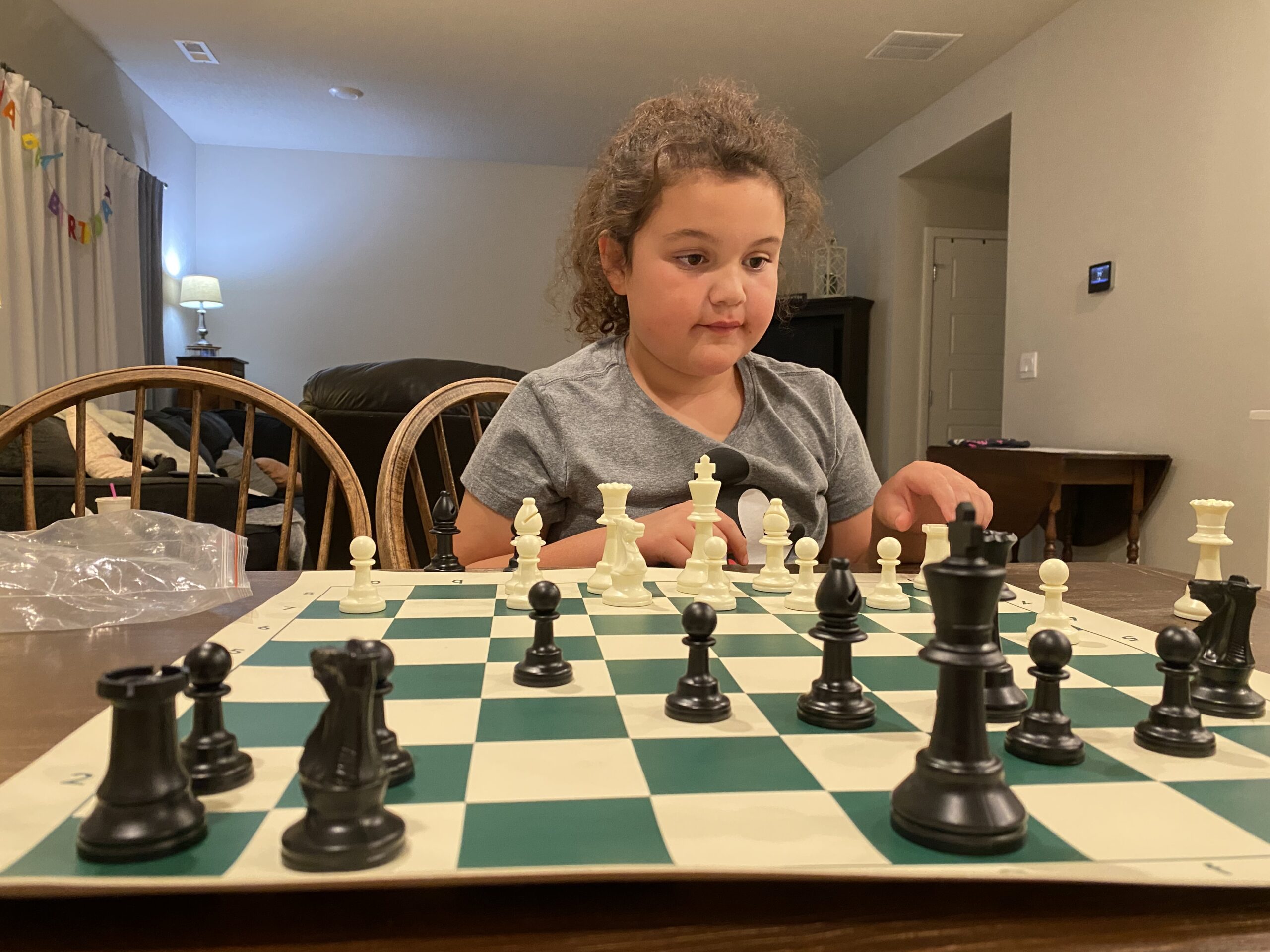
We enrolled Sloan in Chess Club at St. Mary (Spokane Valley) and it has opened up another opportunity for me to bond with her.
Sloan enjoyed fall chess club so much that she re-enrolled for the spring session. Thus, the past few weeks she has stayed after school on Mondays to play and learn more about the game.
Early last week, she asked me a question: Daddy, can I play in the chess tournament on Saturday?
Hmmmm. I loved the idea of her playing chess as an after-school weekly activity. But did I really want to invest an entire Saturday at a chess tournament?
My hesitation was twofold. First and foremost, it was what I alluded to above: I didn’t necessarily want to sit in a random elementary school from 9 a.m. – 4 p.m. on a coveted Saturday. The other reason? I didn’t think Sloan was ready. Although it was organized by the chess organization her club is staffed by (Inland Chess Academy), this was a public chess tournament for children from all across the city. I didn’t like her chances and even though I firmly believe that losing builds character, I didn’t want to place her in a situation where there was absolutely no chance to succeed.
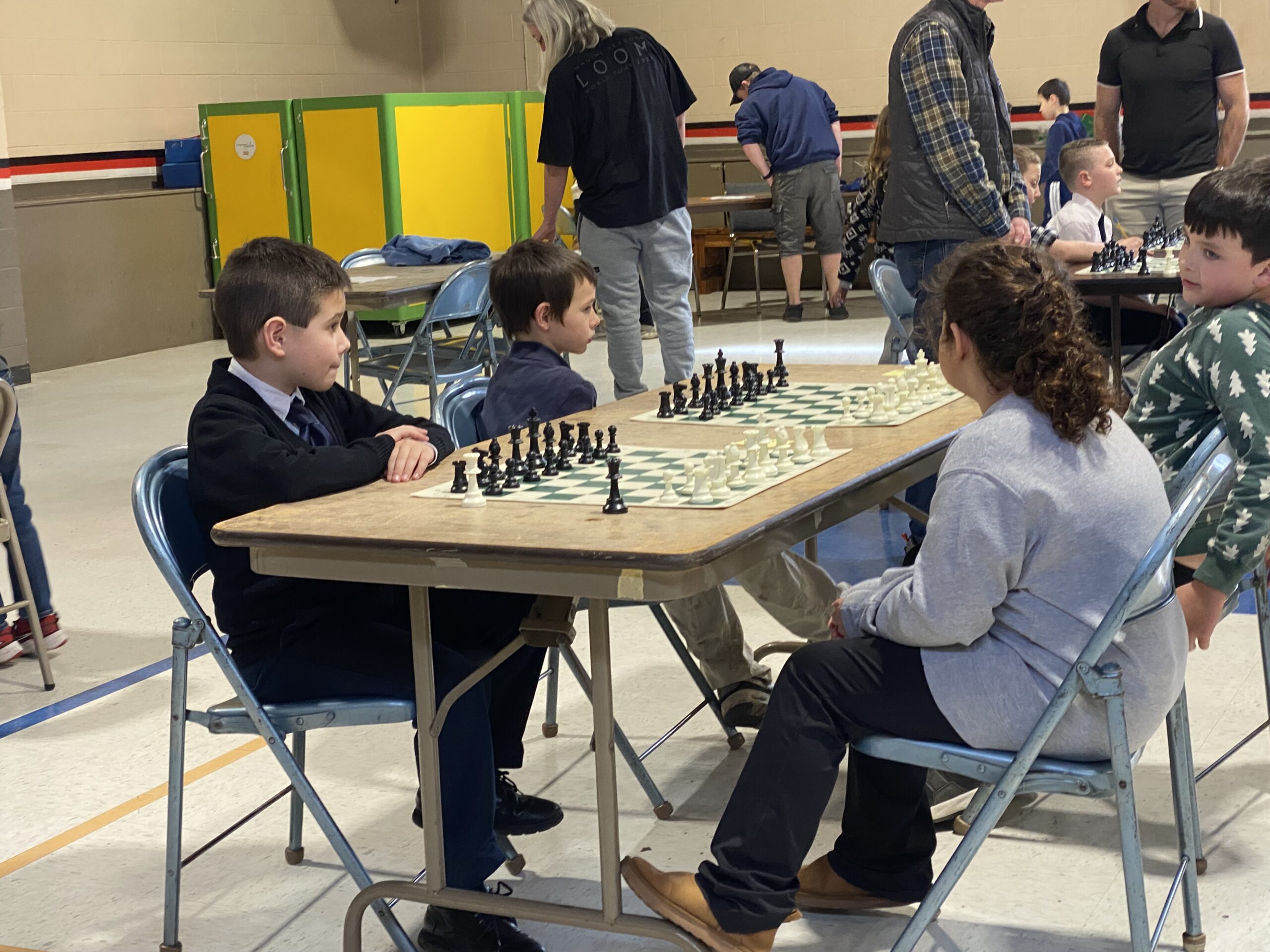
I had my reservations about Sloan playing in a chess tournament but her desire to play convinced me to sign her up for Inland Chess Academy March Madness tournament.
But Sloan kept asking and asking if she could play. On Friday night I finally gave in. I was able to send a text message to a general number and enter her into the tournament. I was informed that she would play five rounds, regardless of whether she won or lost.
The tourney was played at St. John Vianney Catholic School. Once we checked in at the school library, it was obvious that competition was going to be steep. Kids who played in many of these tournaments before were rolling in and you could tell they were serious about chess. With that said, the event organizers had told me that Sloan would be placed in the beginner category, affectionately called the pawns division.
After the check-in period concluded, the tournament director called the event to order by greeting all competitors/families and explaining basic rules/procedures. After that introduction, the kids were able to head to the chess hall to begin the competition. I was able to accompany Sloan to the hall (aka the school gym). To get there we had to walk out of the library and turn left down a long school corridor. At the end of the corridor were double doors that whisked us outdoors. It was then an approximate 50-yard walk in the elements to the school gym.
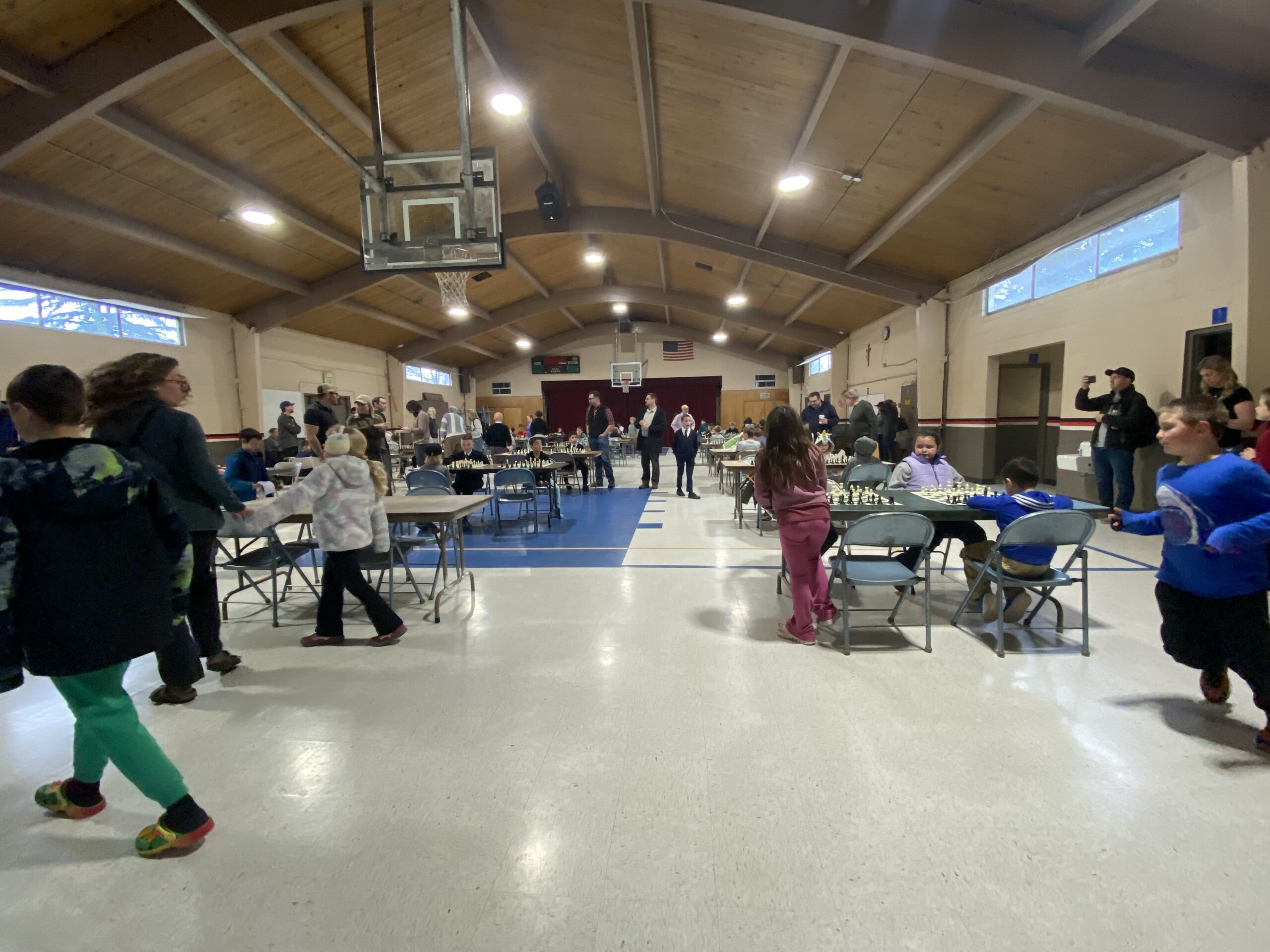
A look inside the St. John Vianney (Spokane Valley) gym at the Inland Chess Academy March Madness tournament. The tourney was well-organized.
Inside the gym was a picturesque scene of what you would envision a chess tournament to look like. More than 20 tables were lined up on the linoleum floor. At each table were two chess sets and four chairs, allowing for two games to take place simultaneously at each table station. When the kids walked in, they referenced a printout that had their table assignments. Sloan’s first placement was Pawn White 15. I made sure she sat down at her assigned spot and then a member of the tournament staff banished all the parents back to the library.
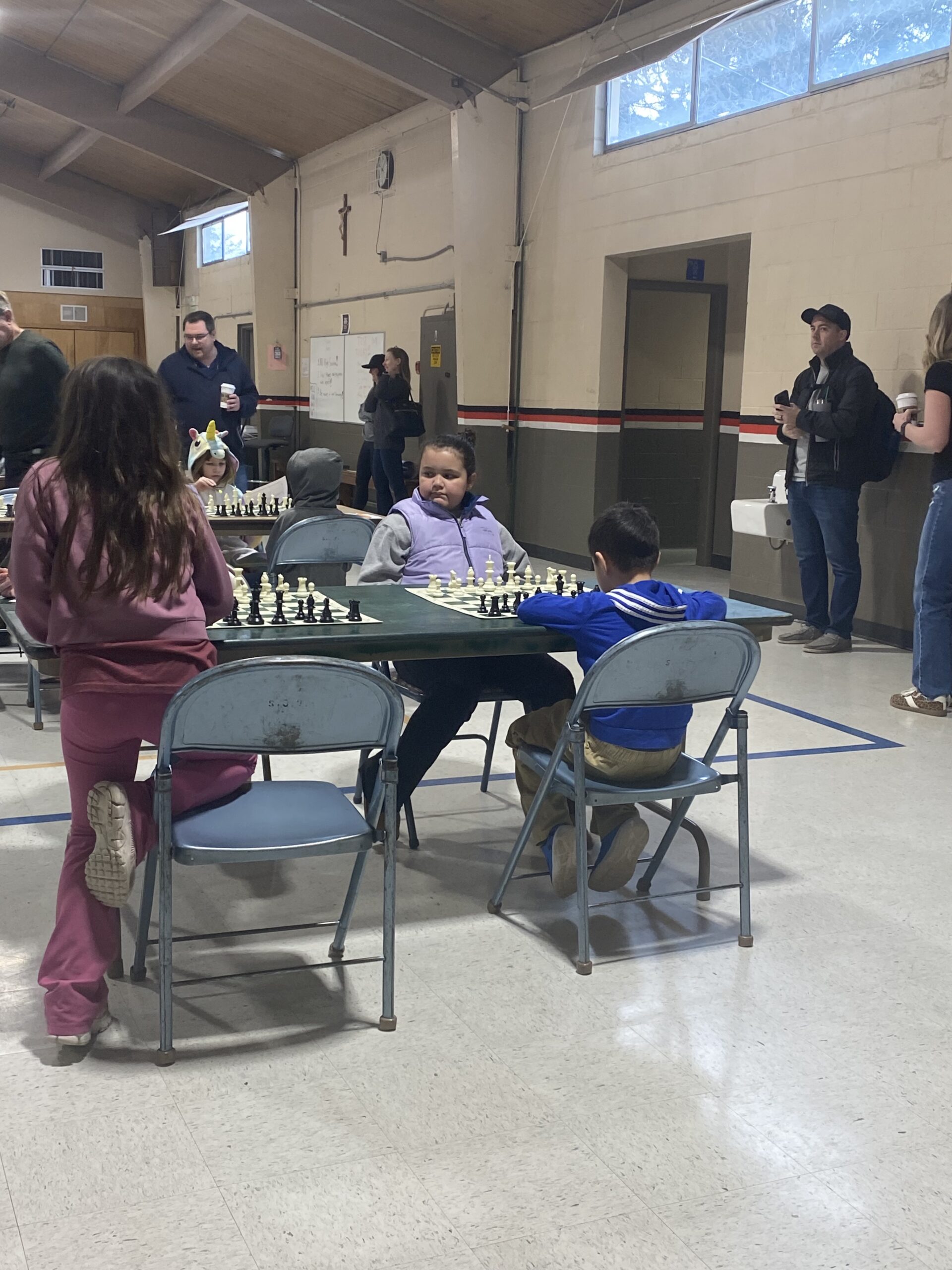
I took this photo of Sloan before her first match right before I returned to the St. John Vianney library.
Back at the library, the tournament director explained the reasoning for why parents were forbidden from the gym during play. Children perform worse, he explained, when mom and dad are watching. Anxiety and distraction negatively impact chessboard decisions made by kids when they sense the pressure of their parents watching. This reasoning sounded completely rational and I totally supported it.
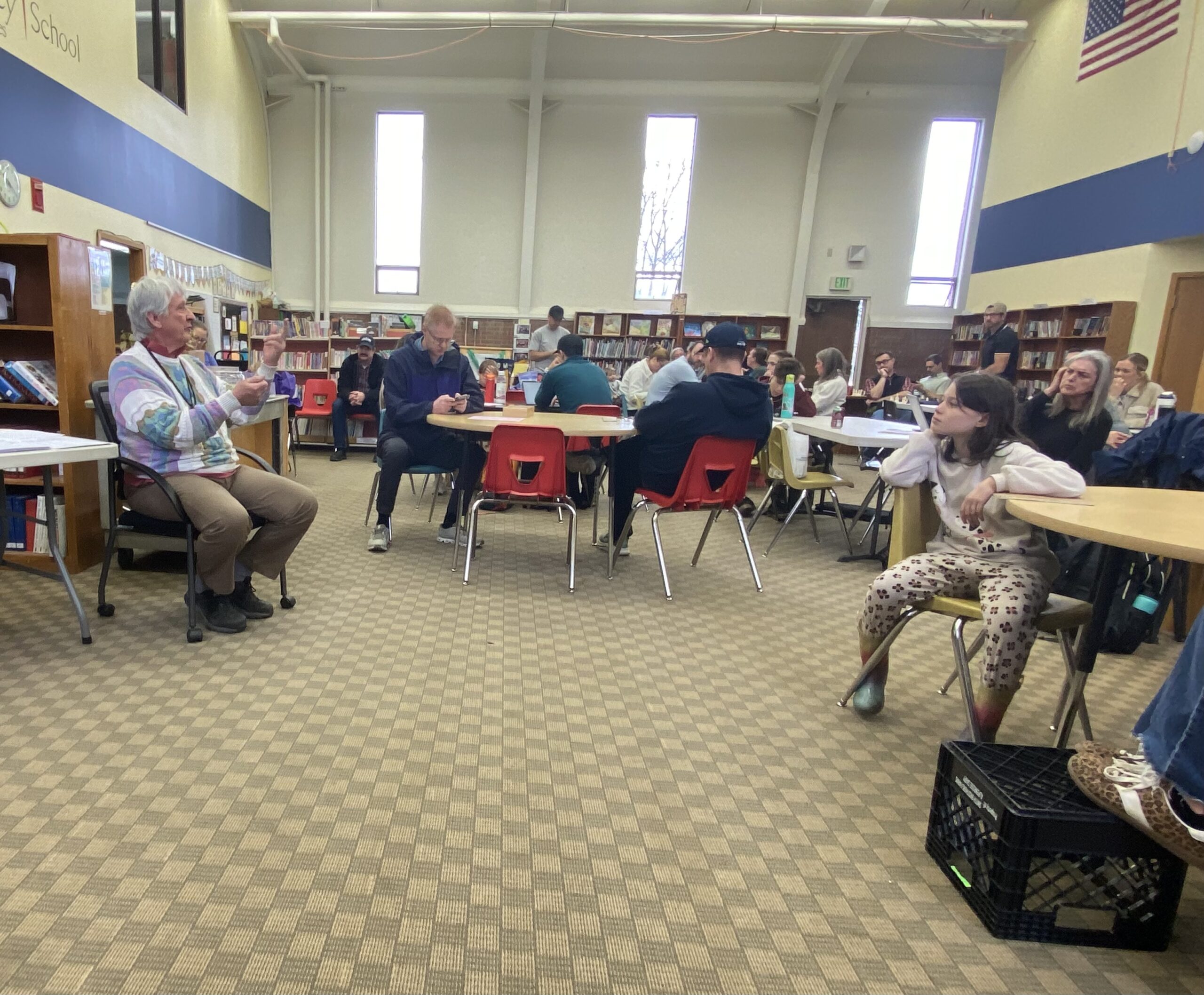
John Dill from Inland Chess Academy, who served as one of the tournament directors, explains to us parents why we weren’t allowed in the chess hall during play.
As the tournament director gave this explanation, kids had already started to return to the library. You see, after a match concluded, participants were told to head back to tournament headquarters. When I saw these competitors return within just five minutes of the tournament starting, I envisioned the legendary four-move checkmates you see in movies. The other observation I made was that you could almost tell immediately by the look on the child’s face if they had won or lost. I knew once Sloan walked through the doors I would immediately know the outcome of her match.
About 10 minutes after I left her in the gym, she returned to the library. Yep, the result was obvious. She had lost. I stressed that today’s competition was a learning experience and she would have several more chances. And thus started the grind of an all-day chess tournament…
Sloan and I quickly learned how these chess tourneys worked. A round is played. Once all games are complete, the tables are re-set and new pairings are determined. Everyone is then called back to the gym to begin the next round. Rinse and repeat. The only thing is that a round doesn’t simply fly by. With 40 games being played each round, not every match is going to result in an instant checkmate. Thus, there can be a lot of waiting between rounds.
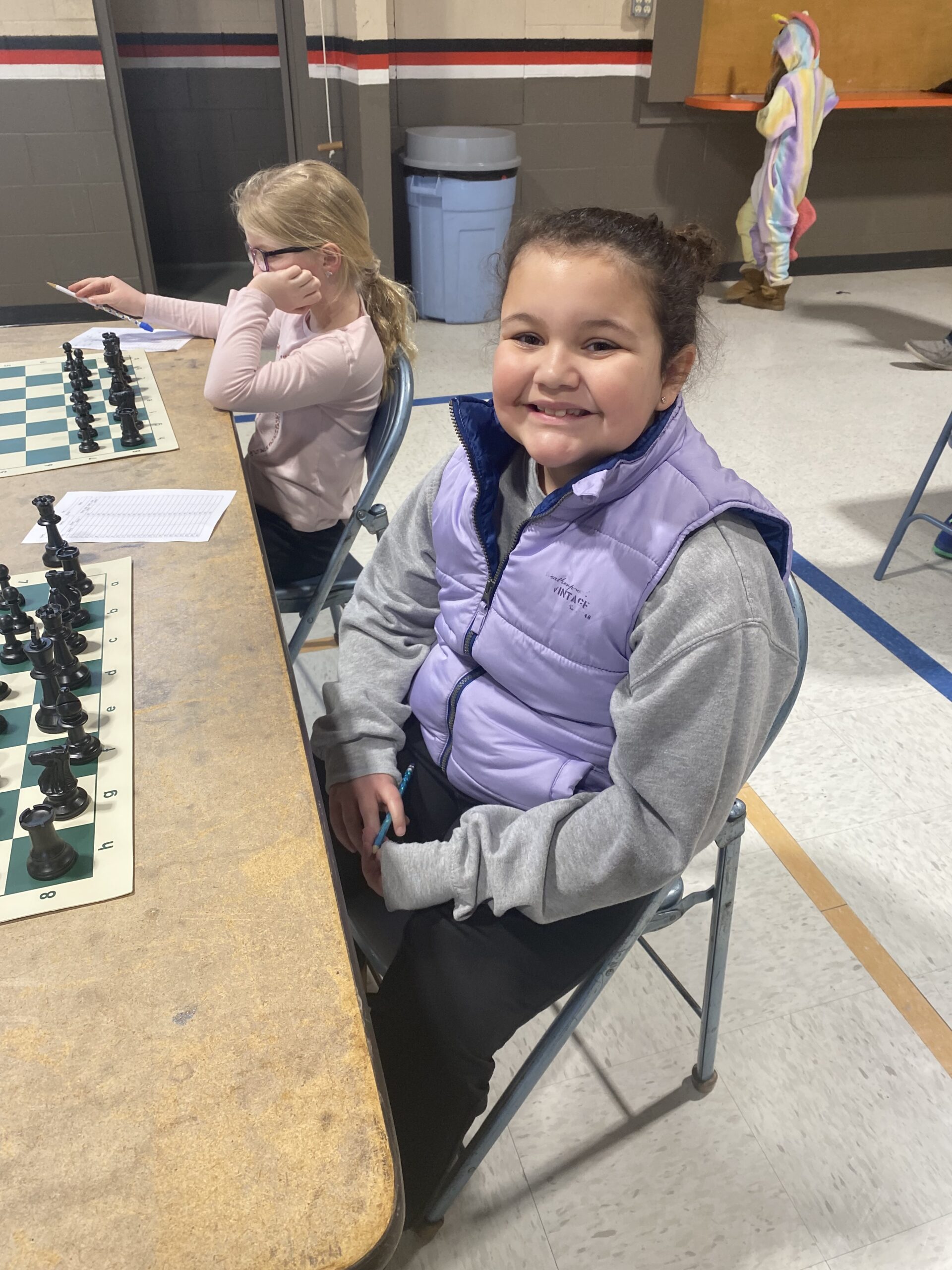
Sloan was all smiles prior to her second match. Unfortunately, it would end in defeat as well.
After Sloan’s defeat to open the day, she experienced the same result in the second round. She hung in longer this time but still lost. She was discouraged but I echoed what I told her the first time and also pointed out that she was more competitive.
The next round saw continued improvement. She fought hard until a stalemate was declared. Her fourth match resulted in an amicable draw.
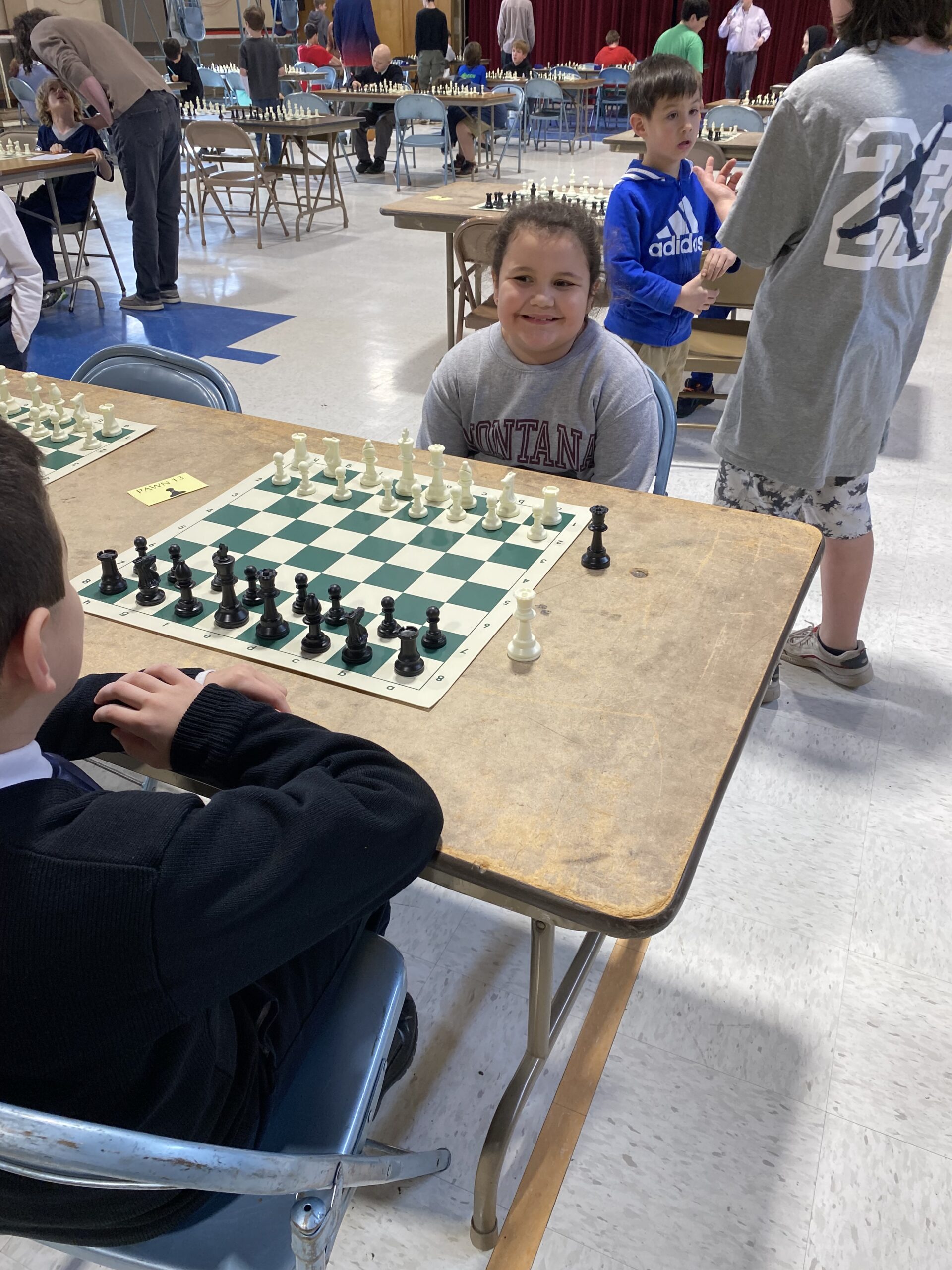
Sloan before her fourth match. She got to play five rounds during the Inland Chess Academy March Madness tournament.
It was close to 3 p.m. before the fifth and final round was set to begin. Sloan and I had spent a lot of time sitting side-by-side each other throughout the day as we waited together between rounds. Even though Sloan had not won a match, I had enjoyed my time with her. As we made the journey out of the library, down the hall, through the double doors, and into the gym for her last game, I didn’t expect a victory. But I did hope the result would be something we could build upon. Once she sat down across from her opponent I told her “good luck” and walked back to the library.
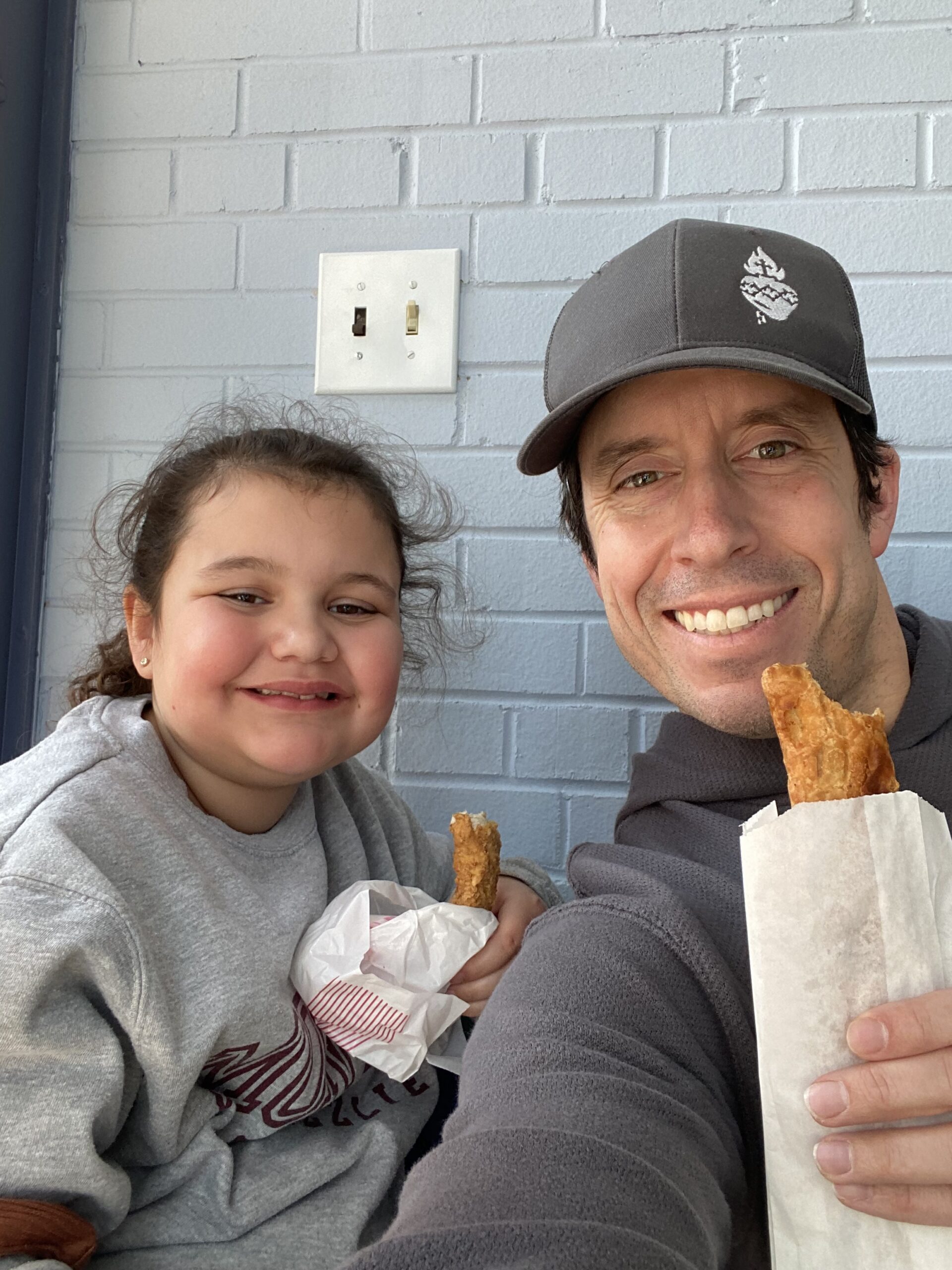
Sloan and I spent a lot of time together on Saturday. This is us eating snacks from the Rosauers deli in-between the third and fourth rounds.
The walk to the chess hall was one thing. I got to experience it five times with Sloan. It came with excitement and nerves. But the walk back? Depending on the result, I knew it had to be either a glorious waltz or a walk of shame for the kids. I knew that this past Saturday probably wasn’t going to be a day where Sloan experienced the former but I hoped that she would get a taste of it in the future.
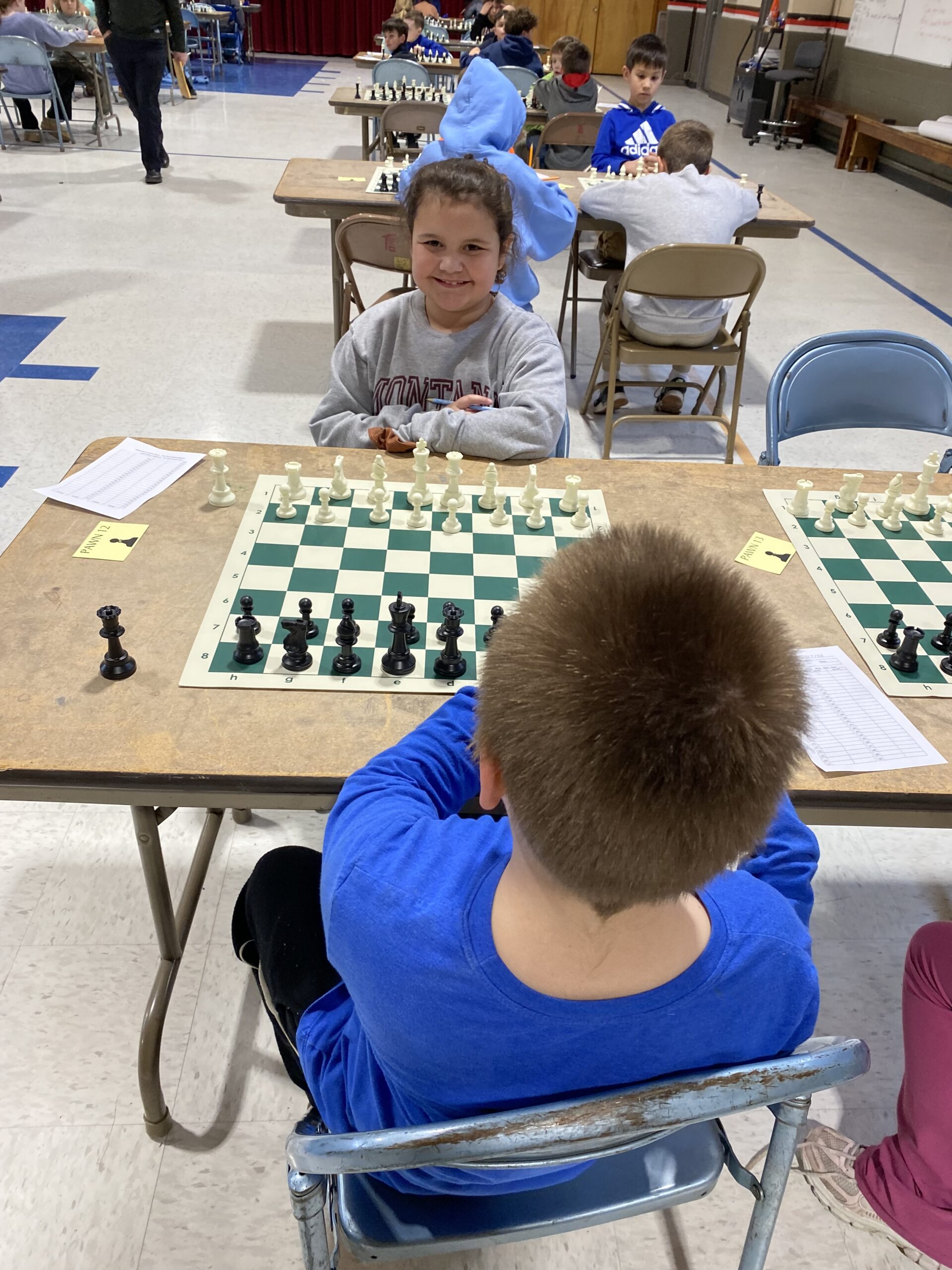
Sloan before her fifth and final match. I was hoping it would end with a positive result.
Well, the victory stroll came a little quicker than I expected.
Probably about 20 minutes after I left her for the final time in the gym, she returned around the corner with a grin from ear-to-ear. She had managed to put her opponent in checkmate and won her first tournament chess game. Even though my daughter’s enthusiasm from her win wasn’t needed to justify a positive and educational day spent with Sloan, it sure ended the afternoon with a major exclamation mark.
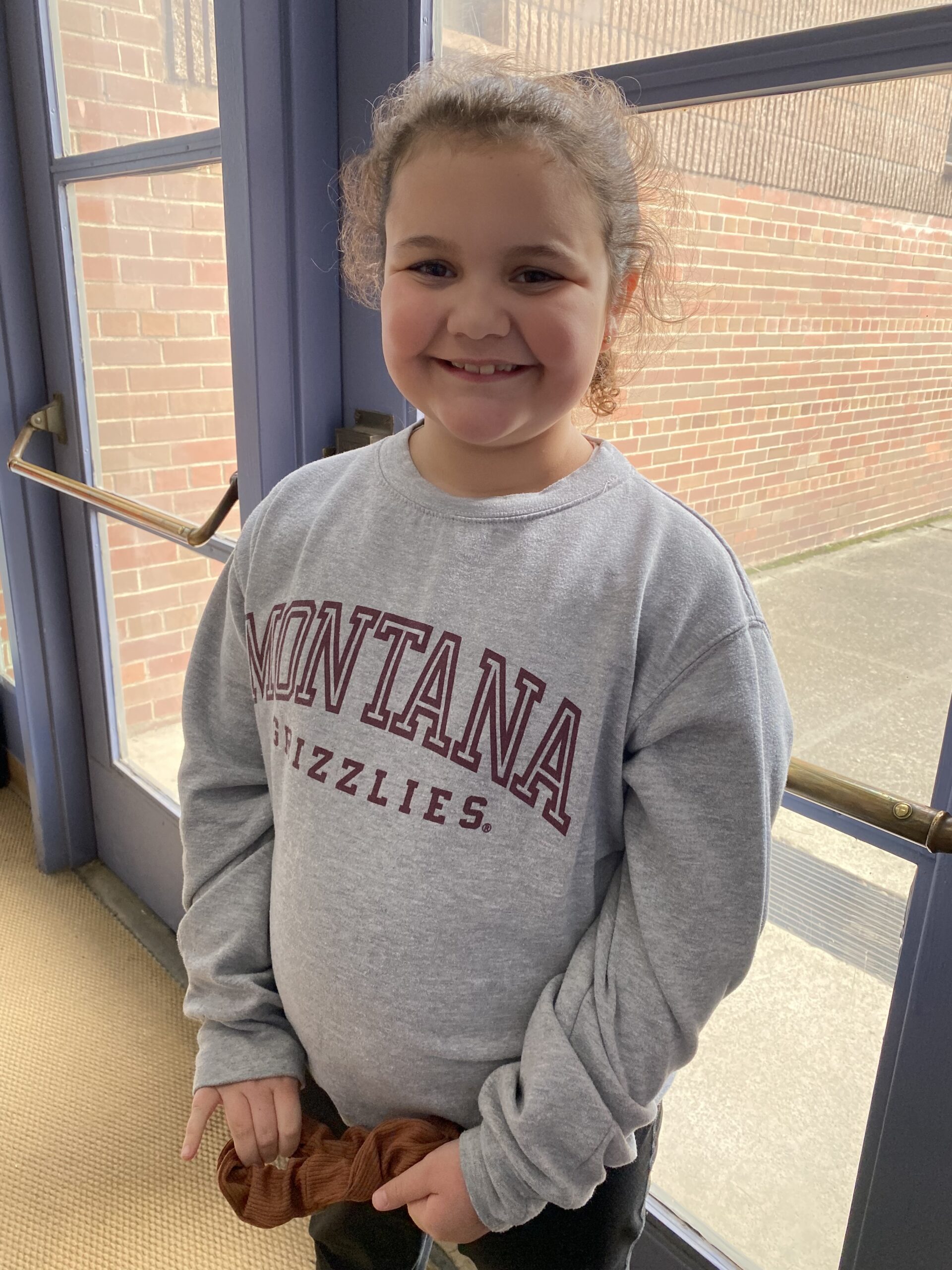
A photo I took of Sloan just moments after she won her game. She was glowing.
When I look back on Sloan’s first chess tournament, the top highlight wasn’t that she managed to win a match. For me, it was that she put herself out there and at the end of the day she said, “I want to do this again, daddy.”

Call me a participation trophy dad, but I got Sloan ice cream after the March Madness Inland Chess Academy tournament because I was proud of her for insisting she play and then competing to the best of her ability.
Thank you to Inland Chess Academy for a fun and organized tournament. I appreciate the fact that it was set up to allow beginners to get needed exposure to the game at a very reasonable price. As Sloan requested, we will definitely do it again. Don’t Blink.
 Facebook